Archive for the ‘dutchness’ Category

tuna in jello

November 9th, 2006

Here's the thing. I like tuna. It's pretty much the only fish I eat casually without "making it a point of eating fish" (except for smoked salmon, but that's way overpriced). But the best kind of tuna comes in a can with jello. Yes, I know it sounds a little strange, but trust me - it's good.

There's only one problem. The Dutch tuna cartel does not authorize the sell of tuna in jello. All they have is tuna in oil, and about six brands of it too. While that may be alright-ish, I want the real thing. Tuna in jello, with lemon juice, now there's a making of a good sandwich. You can even toast the bread for added effect.

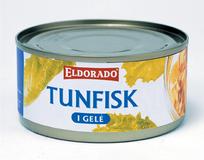
UPDATE: I found a picture of the product. This isn't the one I prefer, it doesn't taste as good as the other brand I rather get. But it's decent, certainly better than the other tuna products.

tunfisk_i_gele.jpg

never again Euroshopper rice

November 2nd, 2006

That's it, I'm never buying that cheapass Euroshopper brown rice again, even if it is dirt cheap. Trying to cook it had me confused about when it was supposed to be done. At no point during cooking did it really taste edible, even though it was soft enough by rice standards.

I'm generally a fan of Euroshopper, they have really cheap stuff and it's generally quite good too. For instance the "English breakfast tea" they produce is very good and incredibly cheap (35c for a pack of 20 tea bags). Most tea products sell for around a buck and aren't nearly as good either. They also have low price soda that's good. But don't buy their pizzas, I did once and was made to regret it.

unit routed

November 1st, 2006

When I was 12, my family went on vacation to England for four weeks. We drove across country to Bergen, hopped on the ferry to Newcastle, headed down south to London for two weeks, spent a week on the south coast by Durdle Door, then returned to Newcastle to catch the ferry home. It's the only time I've ever been to England and we had a very good time. What wasn't quite as thrilling was the ferry itself - 16 hours of waiting at daytime to cross the sea. This is where your attention turns to all kinds of little details you would never otherwise bother with. Like the ferry magazine they put out. Apparently, people go on these ferry rides for weekend shopping (if you live in Bergen I suppose why not, although 32 hours in the space of a weekend sounds pretty brutal), and in this magazine they advertised that Newcastle has the second biggest mall in Europe (I'm sure if you check the rankings things will have changed by now).

While I'm not one for malls nowadays, as a kid I found shopping very exciting. And indeed we spent a couple of hours at that mall, I think it was our idea of visiting the city of Newcastle. The highlight of that mall was certainly the computer store. Back then, I used to subscribe to PCFormat, a UK magazine that was heavily game oriented. And I recall seeing a review for a game in the mag that truly whet my appetite for it. The game was Sid Meier's Colonization, a strategy game revolving around, indeed, colonization. I didn't buy the game, games were very expensive and definitely out of my budget at the time. Walking into that computer store at the mall - which was more of a computer game store really - was something else. The collection of games on display was greater than I could ever imagine. Not that games weren't popular back home, but let's just say that with the UK being [probably] the second largest market for games, and many of the titles being produced there, it was quite a difference from anything I had seen back home. Much to my delight, Colonization, slightly outdated, was on sale for £12 (the average markup on a game, even a dated one, in Norway was about £30).

It's no overstatement to say that Colonization was the highlight of that summer. To this day I remember the game just as well as I remember the vacation. I still had a week off from school after getting home and I spent that week eating and breathing Colonization. I would wake up at 9, start playing and get so involved in the game that the clock would strike 3pm until I felt an incontrollable hunger for breakfast and simply had to pause. The point of Colonization was to select a European power, establish colonies in the New World and then wage a war of independence against the colonizing power. The plot was the same no matter who you played with - England, France, Spain or Holland - with some nation specific twists. The whole thing was loosely based on historical facts, where it suited the game. It was about a lot more than war, however, it also involved trade, diplomacy, emigration, historical figures etc. But ultimately, it was the military strategy which won or lost the game. And the strongest military unit was the cavalry - soldiers on horses with muskets in hand. In the war of independence, the king's troops would attack your colonies. A cavalry unit which lost a battle would lose the horses, so you were left with just soldiers on foot (infantry in modern military nomenclature). A message would inform you of this event, saying "cavalry routed to soldiers". They could still fight, they were just a weaker unit now. Losing another battle meant losing the muskets, which would reduce them to civilians. If you're still reading this, you must be as mesmerized with Colonization as I was. ;)

Aaaand we're back in the present. Tuesday morning I walk out of the house, go round the back to where I park my bike, lost in my own thoughts, when I just stop and pause for a minute. Hang on, where is my bike? This is very odd, it *was* right here. I know I parked it here, I've been doing it for two months. Could someone have moved it? Impossible, it was locked. Huh. That's weird. I've been routed. Reduced to a pedestrian. I was just gonna get on my bike, but now I'm stuck walking. It took me 45 minutes to get to the tennis court rather than the 10 minutes I'm used to. I was definitely surprised. You just don't think it's going to happen to you. All my life I've heard of bikes being stolen, but it hadn't happened to me. When I moved to Holland I was hearing all about how stealing bikes is a national sport. But I had been religiously locking my bike for 20 years and nothing had ever happened to it. First time for everything, huh? I have to say I felt very at peace with the world right than and there. It's probably the mixed emotions of that bike's entire history, I so resented fixing it every time it would break down. But it was still a perfectly well functioning bike, that I had used quite a lot lately.

My insurance should cover the financial loss, but the bike being about 4-5 years old was worth far more to me in terms of transportation than monetary value. In a throwback to Colonization, I find myself strategizing now. Okay, my bike was stolen. So there's no reason it couldn't happen again. And again. And again. Rinse, repeat. So what kind of long term strategy could I adopt here? Well, in the first place - a bigger lock. My lock was fine for Norway use, apparently it was no match for the enterprising Dutchmen (and/or Dutchwomen). If I buy a new bike, which seems inevitable, I'll need a top-of-the-line lock. But that doesn't help much if they steal it again, if I'm going to be embroidered in a never ending cycle of replacing my bike, I'm going to need extra insurance to cover the full cost of the subsequent bikes.

Of course, the other option is to buy a total piece of trash that noone will want to steal, and then bang it up some more so it looks even more worn down, that's one form of insurance in itself. But then again, biking is a form of recreation to me, it's not merely mundane logistics. I'd like to be able to use it on some rides around the city or outside of it, as I've already been doing. So the idea of getting something so crappy noone would want to steal it doesn't really work for me.

catering to consumers

September 11th, 2006

So I finally got my internet account with ABN Amro activated. I set this whole thing up in February when I opened my account, but for reasons unknown the package "went missing" in the mail. This is exactly the kind of thing one should take care, even if there is no immediate need for it. Without an internet banking account, if I want to make a transfer I have to go to the bank, which is not an option. Certainly not after using internet banking for years.

So I went over there to complain and the guy opens with "what can I do for you". I like how friendly they are. Then I tell him all about it and he says "your account was not registered for internet banking". Right, so wtf was the guy telling me when I opened it? The exact opposite.

Well anyway, I get the package and it looks like a dvd. I open the box, there's a little calculator (an electronic device that looks like a calculator and does some hardware-based number crunching specifically for the purpose of logging you into your account) inside. Albeit with a twist, it has a slot for your bank card (like those Game Boys). So I try to log in with this thing. On the website, I have to enter my account number and card number. Then I get a code. I slide my bank card into the calculator, type in the pin, then enter the code I just got off the website. It gives me another code that I have to enter into the website again. Jeez, what an ordeal just to log in. First the two numbers, both printed on my card. Then the pin to my card, and the newly-generated code from the website. Then the code from the calculator. All in all that's 5 different codes I have to handle in one transaction.

But what is an example without a counter example. The Swedish bank Skandiabanken is doing very well on the Norwegian market for reasons I won't expound upon (basically they have cut the number of different charges to the bone, for most things they don't charge you anything, and they have a decent interest rate). When I log into Skandiabanken, all I need is my social security code and a pin code. That's it. I don't need my bank card on hand, I don't need a special 'calculator' or anything else. But, there is a setup cost. The first time you log in, you need to create a user certificate. The bank website has a wizard that guides you through the steps. They will send you a one-time security code per post (or sms), which you have to input as part of the process. So if you register your phone number on their site, they can send you the code by sms, which takes 5 minutes. That means for every new computer you want to access your bank account from, there's a setup cost of about 10 minutes. And then once you've done it once (it's good for a year), you just log in with the social security code and a pin code.

Now tell me that isn't simpler and quicker than ABN Amro's system. Notice I'm not doing a secutity audit of the two methods, I'm just comparing how user friendly they are.

new shopping adventures

September 8th, 2006

Yes, I know I've talked about shopping in Holland before, notably grocery shopping, but this keeps coming up. Aside from deciphering opening hours, figuring out what to buy (using algorithms to determine it), and paying for it, there are new aspects of this activity that come to fore ever so often.

See, in my area there is one Lidl, and a bunch of Albert Heijns. Not much of a choice at all. I'm sick of Lidl, because although they're cheaper, they have the most wacky set of items. All kinds of ultra cheap products that I'm not so confident about buying, but very lacking in the realm of common products. So I stopped going there, which means I'm left with Albert Heijn. Now this widespread Dutch chain is somewhat peculiar.

See, in Norway, if you go to Rema1000, you know that it's open 9-21 (9-18). Weekdays until 9pm, Saturdays until 6pm. And it doesn't matter which Rema1000 store you go to, every single one has the same opening hours. There may be some exceptions for stores that are dead in the center of a city, there may be longer opening hours in the summer, things like that. But for the most part, 99% of the time, you know that this store is open at certain hours everyday.

Albert Heijn, meanwhile, doesn't play like this. They categorize their stores by location and size. And then set opening hours individually for each store based on that. And based on the season. And based on the formation of ice glaciers in Antarctica, seemingly. What this means in practice, is that whenever I need to go shopping, and it isn't within the dead certain opening hours (10-18), I have to check when they're open. A few months ago when it was cold, I couldn't find a single open Albert Heijn in all of Utrecht on a Sunday. Last Sunday there were 5. Next week noone knows. Today (Thursday) they're open until 21, but in winter usually until 18. So while they enjoy rolling the dice in Albert Heijn head quarters, I'm left wondering.

Another thing that's causing me distress is being pulled over for speeding. As such, my location is sub-optimal, I live about 100m away from the main police station in Utrecht. And I don't care to bike any more in line with party policy around that building either, I still do what I've always done - bike with common sense. The other day I did something less than brilliant. I was crossing a street (with no traffic) on a red light and there was a car coming up on my left (I was on the bike sidewalk). It was turning right, while I was going straight. Turns out it was a cop car on a half-siren (lights flashing, no sound effects). I didn't see it until I was actually in the middle of crossing. It's a good thing they were busy.

Then I get to the store (did you think we were done with that topic?) and I'm parking my bike. It doesn't have a kick stand, so I have to lean it up against something. It's after 8pm, so the main shopping rush is long gone, there aren't that many bikes left in the little bike parking lot. As I'm locking my bike, through the rear wheel, the front leans over to the right a bit and falls on the bike that was standing next to it. So the bike is now in free fall, it falls onto the bike next to it and both of them go down. This wouldn't happen at rush hour, the parking lot is densely populated then. But at this time, the bikes are about 1m apart and this domino effect is made possible. I finish locking mine up, then I go over to the other two and put them up. As I'm doing this, a guy comes up to one of them, it's his bike. I say "sorry about this" and he gives me the most distant and careless "no problem" ever. I almost expected him to say "dude, that's exactly how I park my bike, I just throw it on the pavement". Well, most of the bikes in circulation are from World War 2, so it's not like I knocked over some delicate machinery, but you would still expect people to care at all. I bet I would get stick (or at least nasty stares) over this in Poland. :D

So I go into Albert Heijn and here's the thing. There's no bread after 11. They put out the bread in the morning, people buy it and if you come in at noon, it's all gone. All they have left for you is either some fancy, expensive bread, or alternative bread products, like bread with raisins dipped in sugar etc. This used to be a problem for me, my bread consumption is really high. But recently I stopped buying bread and I only get Wasa knekkebrød.

Then I go to the checkout and here's another Dutch quirk. In Norway, we have a conveyor belt leading up to where the cashier sits, then another belt right in front of her, finally a third conveyor belt beyond that. So all in all, the length of the whole thing is about 4m or so. This ensures that even when people do volume shopping (ie. a shopping cart and a half), there is enough space for them to unload their stuff, then load it into plastic bags. There's also a sliding divider at the end that separates your items from the next person's. Over here, (it does depend on the store a bit), the belt going to the cashier is shorter. So there's a lot less space on it. Then the belt from the cashier is shorter too, in some cases it's not even there, just a small counter where your items accumulate before you load them up. This makes it more awkward around checkout, there's less space, you try to stack your stuff in layers so that you can unload it all onto the belt and put the basket away. Then after you pay for it, sometimes your stuff gets mixed up with the person coming after you. If there's no belt going from the cashier, you make people wait for you to load up your stuff before the next person can go as there's simply no space. At Lidl, they actually have an extra long belt to the cashier (implying that people will be buying in high volumes) and then just a small counter afterwards (so after being scanned, their items will fall on the floor unless you bring trained packaging personnel).

Unfortunately, there is no Plus in my area. That seems to be the-supermarket-for-Norwegians, their stock is arranged logically, their checkout counter is normal size, they accept credit card on payment etc. It's also a little cheaper than fancy Albert Heijn. Sort of the Rema1000 equivalent.