Archive for the ‘observations’ Category

technology "must work"

December 21st, 2006

As I'm reading about enterprise integration patterns, which is a study of common software design solutions in enterprises, it strikes me how many points of failure these technologies have. And that instills in me a sense of compassion for the deployment of such solutions, there are so many angles to cover. And to our benefit as consumers, these complex structures appear simple.

Making an airline reservation can be a process which requires several different systems on different machines to co-operate. There is recording the order, which could be handled by an Order Processing System. Then there is recording customer data (address, date of birth etc), which could be stored in a special Customer Database Registry. Then there is checking for flight availability (websites currently have browseable calendars where dates/times of available flights are highlighted), and this would require checking a Flight Database and a Flight Booking Database, to 1) find flights and 2) see if they have open seats. Then there is processing payment, which is often handled by a third party, like Visa. Then, once a flight has been selected, it has to be recorded in the Flight Booking Database, upon which a confirmation is sent and the order is complete. This whole transaction has to be handled alongside another thousand bookings happening right at the same time.

All of this appears to the customer as a series of simple web pages, sometimes poorly designed and annoying to use, marred by server outages. But it's not just the web server displaying the pages that can face problems, any of the systems can give out and the booking procedure would face a serious problem. Now, as a developer involved in building this infrastructure, I would certainly appreciate the possibility for errors, and how errors anywhere in the chain could be very damaging. But as a customer, I have no sympathy nor patience for problems. I demand to be served, and that's that. It is, in a sense, a curious contrast between the two worlds.

But if technology is considered by critics as "unreliable", just imagine what it would be like if we didn't mind waiting for our bookings, didn't mind our reservations being canceled, didn't mind our tickets becoming invalidated through glitches and so on. Our standards at least drive technology to excel, heads to roll, companies to go out of business, and customer services to improve.

As fate would have it, a perfect example of the lack of patience we have with technology: getting pictures from a camera.
Tomorrow Lives

December 5th, 2006

If you haven't seen the James Bond movie from 1997 called Tomorrow Never Dies, you should. One because it's a cool movie with an interesting plot and a competent execution of that plot, two because the soundtrack by David Arnold is a work of art. Definitely one of the better Bond movies to be made in the period since Brosnan made the role his.

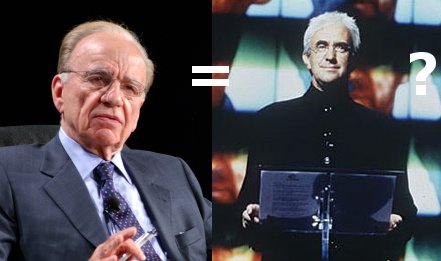
But back to that plot. The villain is Elliot Carver, a media mogul with evil plans to manipulate his global media empire for his selfish goals of economic success. Think about that idea for a minute. Does that sound far fetched? It doesn't really, does it? Lawrence Lessig writes in his book Free Culture:

Five companies control 85 percent of our media sources. The five recording labels of Universal Music Group, BMG, Sony Music Entertainment, Warner Music Group, and EMI control 84.8 percent of the U. S. music market. The five largest cable companies pipe programming to 74 percent of the cable subscribers nationwide.

So it's not one Carver empire, it's five different corporations in competition with each other.

Another thing that has changed is that up until 2003 the media could not own the content they published, because the law forbade it. Now they do own it, so you can get a full, integrated package from a single outlet.

Murdoch's companies now constitute a production system unmatched in its integration. They supply content - Fox movies, Fox TV shows, Fox-controlled sports broadcasts, plus newspapers and books. They sell the content to the public and to advertisers - in newspapers, on the broadcast network, on the cable channels. And they operate the physical distribution system through which the content reaches the customers. Murdoch's satellite systems now distribute News Corp. content in Europe and Asia; if Murdoch becomes DirecTV's largest single owner, that system will serve the same function in the United States.

It's funny when you realize that what you saw in a fiction movie is the actual reality. Is Rupert Murdoch today's Elliot Carver?

murdoch_carver.jpg

curing smoking

November 30th, 2006

Politicians like to bemoan how much money governments have to spend on keeping people alive. People who would be well if they took better care of themselves. Instead they have all kinds of bad habits and get sick, which represents a blow to the economy blahblah. And for that reason, every once in a while, the Minister for Health and others will reiterate how smoking is a serious problem and how they plan to eradicate it through all kinds of campaigns and new regulations they have in mind. Well, they have succeeded in reducing the number of smokers, but the total extinction of smoking is nowhere near fruition. And I don't think that is the campaigns at fault, I think it's smoking itself.

Smoking kills, but it just doesn't kill fast enough. People have all kinds of trouble understanding long term scenarios. If you tell them joining the EU will make the farmers suffer rough competition right now, but in the long run it will modernize and improve the country, after a year they say they want communism back. Long term health problems are that way too, the effect is too far away from the cause that triggers it. And so we need to improve upon that.

We should make smoking kill instantly. That will drastically reduce the number of smokers. It will also reduce the number of obnoxious "look how cool I am" high school kids. And on the packs, instead of printing smoking kills, we print don't believe what you hear, smoking never killed nobody. (Which is actually logically equivalent to the statement smoking always killed everyone, but smokers are way too addicted to think about those labels anyway.)

So let's review the consequences..

  • The politicians are happy - smoking kills a lot more people now, but it represents no cost to health care anymore.
  • I'm happy - I don't have that mofo blowing smoke into my air.
  • The smokers who always wanted to quit, but couldn't, are happy - they finally made it.
  • The smokers who said "I don't care if it kills me, it's too good to give up" got what they wanted.

language learning drudgery

November 29th, 2006

I'm having one of those "I can't believe no one thought of this before" moments. If you've learnt at least one foreign language, then you know how it goes. The beginning is exciting, because it's a new language and it's a very cool prospect of being able to understand a whole new world in a sense. At the same time, the enthusiasm is quenched by the drudgery of the process. After you've established the basics, you can pretty much go whichever way you want with it, but at the beginning you are introduced to a new language in the exact same way every time. If you've learnt more than one foreign language, you know exactly what I mean. "My name is", "I am from", "I live at", "How are you" etc etc. How bloody boring is that?

The students are snoozing, but imagine what the teacher must be thinking, doing this every year. What I don't get is why textbooks for language basics aren't a little more creative, I mean how hard could it be? Instead of those inane "my name is, how are you, where are you from" dialogs, why not substitute something more interesting? How about a story about a terrorist taking hostages in a bank? Or a bunch of people on a plane who find themselves back in time? Or a nefarious cracker with ambitions to take over the world who hacks into NORAD? Or a comedy about a bunch office workers who hate their job and stage a revolt against management? Any of those stories you could dumb down sufficiently and still get the same material out of them, the basic verbs, pronouns, all the fundamental grammar, cause that's found everywhere. But while doing so you'd have a compelling story to follow, instead of the usual bs.

I solve problems, that's just what I do.

on the relativity of reason

November 26th, 2006

Richard Dawkins is a popular crusader for Darwinism and at that, of course, a highly controversial figure. I have actually found everything I've heard him say to be entirely reasonable and meaningful. This clip I found on youtube is not to do with Darwin vs religion, however, it is centered on consequences of evolution in all kinds of ways. It's remarkable, because the examples and explanations he gives are things that I instinctively strongly feel to be true, I just have not heard them articulated by anyone before. The notion that humans live in a physical world suitable to our scale, scaled to our bodies, and that this is the reason why we find it so hard to comprehend both the micro scale and the macro scale. I actually wrote an essay dealing with these two extremes in high school, so I completely recognize the proposition and in terms of evolution it also seems highly logical that this should be the case.

In other words, what we find to be true and false is not in relation to some absolute, objective truth, because there is no such truth. What we find to be true is only a product of our evolutionarily shaped minds, as they have been to survive in the climate we find ourselves in. And that is the essence of one of my strongest instincts, in fact. So another entity equipped with what we call "reasoning ability", having evolved in a vastly different climate, would conceivably not share any of our conclusions or views about the physical world, because that world would be different. Physics and mathematics are not absolute sciences, they are sciences relative to us. Observable, verifiable phenomena we observe and we verify. So if something seems to be impossible, does it mean it really is? Or is it simply "not possible" within our grasp of reason.

Which, in essence, is why our definition of intelligent life is quite broken in my view.